What is A DA (diagnostic assessment)
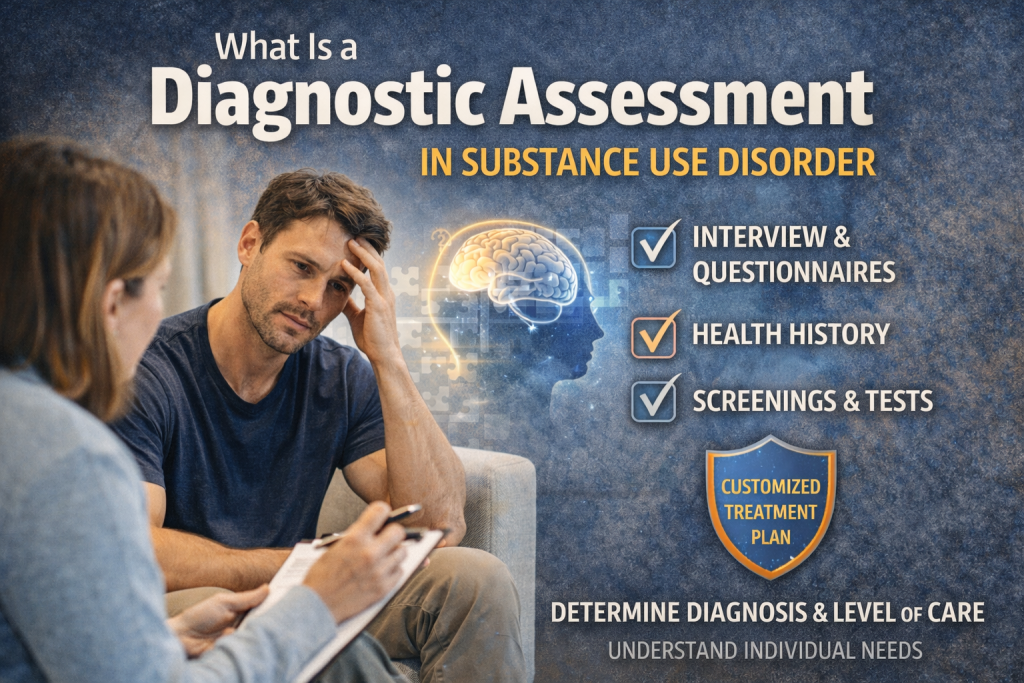 Clinical Assessment and Diagnosis of Substance Use Disorders (SUDs)
How clinicians diagnose SUD/AUD using DSM-5-TR and a biopsychosocial assessment—then match care to risk and need.
What “clinical assessment” actually means
A clinical assessment for substance use is a structured process that answers four questions:
- Is there a substance use disorder (SUD)?
- How severe is it? (mild, moderate, severe)
- What risks are present right now? (withdrawal, overdose, suicidality, violence, medical instability)
- What level of care fits? (detox, residential, PHP, IOP, outpatient, medications, peer support)
Good assessment also identifies what keeps use going (pain relief, sleep, trauma symptoms, social pressure, untreated mental health, housing instability) so treatment is targeted, not generic.
DSM-5-TR: the 11 SUD criteria
DSM-5-TR defines SUD as a problematic pattern of use leading to clinically significant impairment or distress, with at least 2 of 11 criteria in a 12-month period.
Impaired control
- Using more or longer than intended
- Persistent desire/unsuccessful efforts to cut down
- Spending a lot of time obtaining/using/recovering
- Craving (strong urge to use)
Social impairment
- Failure to fulfill major role obligations
- Continued use despite persistent social/interpersonal problems
- Giving up or reducing important activities
Risky use
- Use in physically hazardous situations
- Continued use despite physical/psychological problems caused or worsened by use
Pharmacological
- Tolerance
- Withdrawal
Severity specifier
- Mild: 2–3 symptoms
- Moderate: 4–5 symptoms
- Severe: 6+ symptoms
AUD is SUD with alcohol-specific context
Alcohol Use Disorder (AUD) uses the same DSM framework, but clinicians pay special attention to withdrawal risk, history of seizures/DTs, and medical complications (liver disease, pancreatitis, GI bleeding). If withdrawal risk is high, the correct first step may be medical detox.
Biopsychosocial assessment: what clinicians evaluate
Biological (medical + withdrawal + medications)
- Current substances, amounts, frequency, route (oral/snorted/smoked/injected)
- Last use; prior withdrawals; history of seizures/DTs
- Overdose history; tolerance changes; fentanyl exposure risk
- Medical conditions; pregnancy; pain; sleep
- Current meds (especially sedatives); medication interactions
Psychological (mental health + cognition)
- Depression, anxiety, trauma symptoms, psychosis, ADHD
- Suicidal thoughts/self-harm; safety planning
- Impulse control and executive functioning (see risk and decision-making)
- Motivation and ambivalence (what the substance does for them)
Social (environment + support + stability)
- Housing, food security, transportation
- Legal stressors, employment, childcare
- Family system, relationship safety, domestic violence risk
- Recovery supports: peers, groups, faith/community, sober network
Risk assessment: what changes the plan today
Clinical diagnosis and severity are important, but acute risk often determines next steps:
- Withdrawal danger (especially alcohol/benzodiazepines)
- Overdose risk (recent abstinence, fentanyl exposure, mixing substances)
- Suicide risk or severe depression
- Medical instability (dehydration, infection, uncontrolled diabetes, pregnancy complications)
That’s why level-of-care decisions are not purely “how bad is it,” but “what’s safest and most effective now.”
How assessment connects to treatment
Assessment should end with a clear plan:
- Recommended level of care
- Whether medications are indicated (including MOUD)
- Whether harm reduction is needed immediately (naloxone, safer-use planning, testing strips)
- Co-occurring mental health evaluation (see co-occurring disorders)
Related Reading
- Levels of Care Explained: How to Know What Kind of Help You Actually Need
- Detox Is Not Treatment: What Detox Does — and What It Doesn’t
- MOUD 101: What Medication for Opioid Use Disorder Is — and Why It Saves Lives
- Where Addiction Lives in the Brain — and Why It Can Feel Like Survival Without Substances Is Impossible
More Recovery Resources from Red Door
- Community Meetings Directory — Find AA, NA, SMART Recovery, Al-Anon, and Celebrate Recovery meetings
- Meetings Blog — Articles about recovery meetings and what to expect
- Peer Support Specialists — Connect with certified recovery coaches
- Harm Reduction Agencies — Naloxone, needle exchange, and overdose prevention
- Food Pantries — Free food assistance for those in need