Why Alcohol and Benzodiazepines Require Medical Detox — But Meth and Opioids Usually Do Not
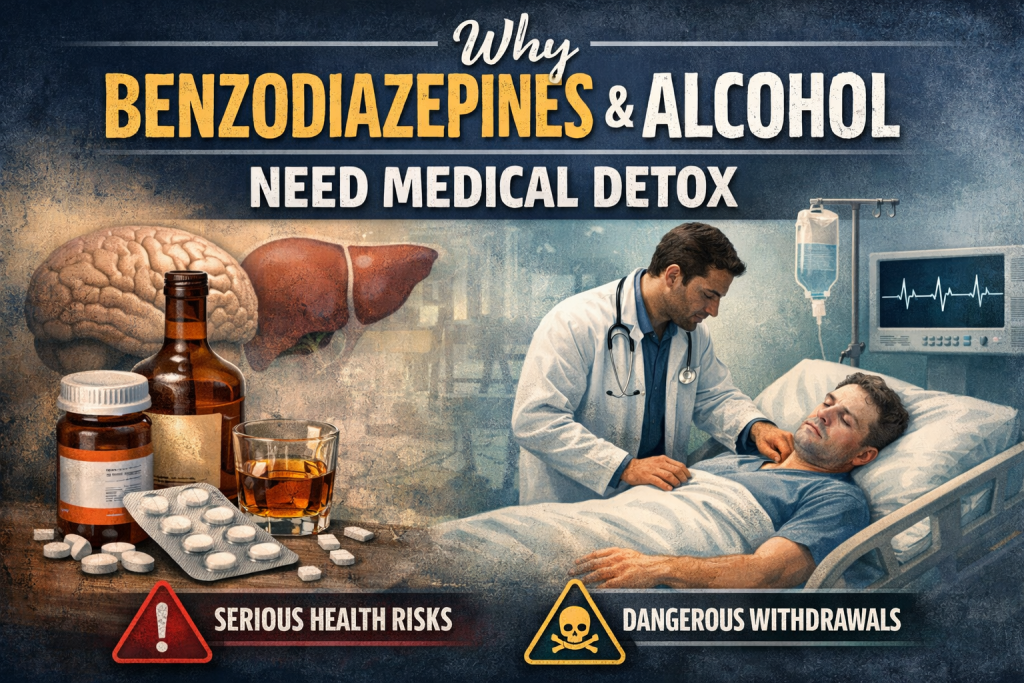
Why withdrawal risk isn’t the same for every substance
“Detox” is a medical question: What happens to the nervous system when the substance is removed? Different drugs act on different receptor systems. Some create withdrawal that can destabilize breathing, heart rhythm, temperature regulation, or consciousness.
Alcohol and benzodiazepines: GABA and seizure risk
Alcohol and benzodiazepines both enhance GABA, the brain’s primary inhibitory (calming) system. With repeated use, the brain compensates by reducing baseline inhibition and increasing excitatory drive. When alcohol/benzos stop suddenly, the balance swings hard toward excitation.
- Seizures
- Delirium tremens (DTs)—confusion, agitation, hallucinations, autonomic instability
- Dangerous blood pressure/heart rate changes
That’s why clinicians often recommend medically supervised detox for significant alcohol or benzodiazepine dependence—especially with prior withdrawal complications.
Opioids: severe distress, but usually not fatal withdrawal
Opioid withdrawal commonly causes:
- body aches, nausea/vomiting/diarrhea
- insomnia, anxiety, restless legs
- cramping, sweating, chills
For most healthy adults, opioid withdrawal is not typically medically lethal. The major danger is what happens next: people use again to stop the symptoms, and tolerance may be lower—raising overdose risk.
This is where MOUD (buprenorphine or methadone, and sometimes naltrexone) reduces death risk by stabilizing cravings and withdrawal.
Meth: crash and dysregulation, usually not seizure withdrawal
Stimulant withdrawal often looks like:
- fatigue, depression, anhedonia
- sleep disruption
- irritability, anxiety
- strong cravings
The “danger” is often functional and psychiatric—severe depression, suicidality, impulsive decisions—rather than a classic seizure-withdrawal syndrome. That’s why assessment of mood and safety is critical (see clinical assessment and risk and impulse control).
Detox isn’t the finish line
Even when detox is medically necessary, it isn’t treatment by itself. Detox stabilizes the body. Recovery requires ongoing care, skills, support, and often medications. See Detox Is Not Treatment and Levels of Care Explained.
Related Reading
- Detox Is Not Treatment: What Detox Does — and What It Doesn’t
- Levels of Care Explained: How to Know What Kind of Help You Actually Need
- Clinical Assessment and Diagnosis of Substance Use Disorders (SUDs)
- Where Addiction Lives in the Brain — and Why It Can Feel Like Survival Without Substances Is Impossible
More Recovery Resources from Red Door
- Community Meetings Directory — Find AA, NA, SMART Recovery, Al-Anon, and Celebrate Recovery meetings
- Meetings Blog — Articles about recovery meetings and what to expect
- Peer Support Specialists — Connect with certified recovery coaches
- Harm Reduction Agencies — Naloxone, needle exchange, and overdose prevention
- Food Pantries — Free food assistance for those in need