Detox is NOT Treatment
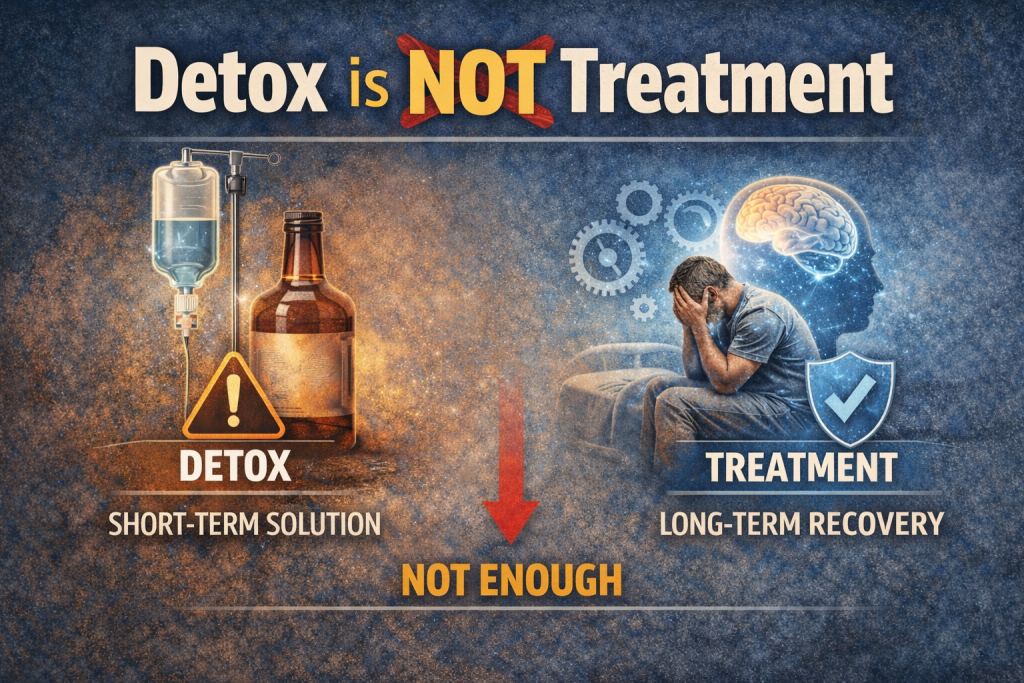 Detox Is Not Treatment: What Detox Does — and What It Doesn’t
Detox stabilizes the body. Treatment changes the pattern. Here’s how to tell the difference and what to do next.
What detox does
Detox (withdrawal management) focuses on acute stabilization:
- monitoring vitals and hydration
- preventing medical complications (especially alcohol/benzodiazepines)
- reducing severe withdrawal symptoms
- starting a bridge plan to ongoing care
Detox can be inpatient, residential, or outpatient depending on withdrawal risk and stability (see levels of care).
What detox does not do
Detox does not automatically address:
- craving conditioning and survival learning
- stress and emotion regulation skills
- trauma and co-occurring mental health symptoms
- housing instability, relationships, legal pressure
- the “why” the substance worked for the person
That’s why many people relapse quickly after detox if nothing else changes.
Why relapse after detox is common
After detox, the brain may still be in threat mode. Decision-making and impulse control can be impaired (see risk and cognitive function), and cravings can feel like survival (see where addiction lives in the brain).
What “treatment” actually includes
Effective treatment usually includes a combination of:
- structured therapy and skills training
- peer support and recovery community connection
- medications when indicated (especially MOUD for opioid use disorder)
- case management and practical stability supports
- harm reduction planning to reduce immediate danger
Detox should end with a placement plan
A strong detox program actively coordinates the next step:
- residential or partial hospitalization (PHP) when structure is needed
- intensive outpatient (IOP) when stable housing/support exists
- outpatient therapy + medication + peer support for ongoing maintenance
See Levels of Care Explained for how placement works.
Related Reading
- Levels of Care Explained: How to Know What Kind of Help You Actually Need
- Clinical Assessment and Diagnosis of Substance Use Disorders (SUDs)
- MOUD 101: What Medication for Opioid Use Disorder Is — and Why It Saves Lives
- Where Addiction Lives in the Brain — and Why It Can Feel Like Survival Without Substances Is Impossible
More Recovery Resources from Red Door
- Community Meetings Directory — Find AA, NA, SMART Recovery, Al-Anon, and Celebrate Recovery meetings
- Meetings Blog — Articles about recovery meetings and what to expect
- Peer Support Specialists — Connect with certified recovery coaches
- Harm Reduction Agencies — Naloxone, needle exchange, and overdose prevention
- Food Pantries — Free food assistance for those in need