Levels of Care - What Are They and How Do They Direct My Recovery
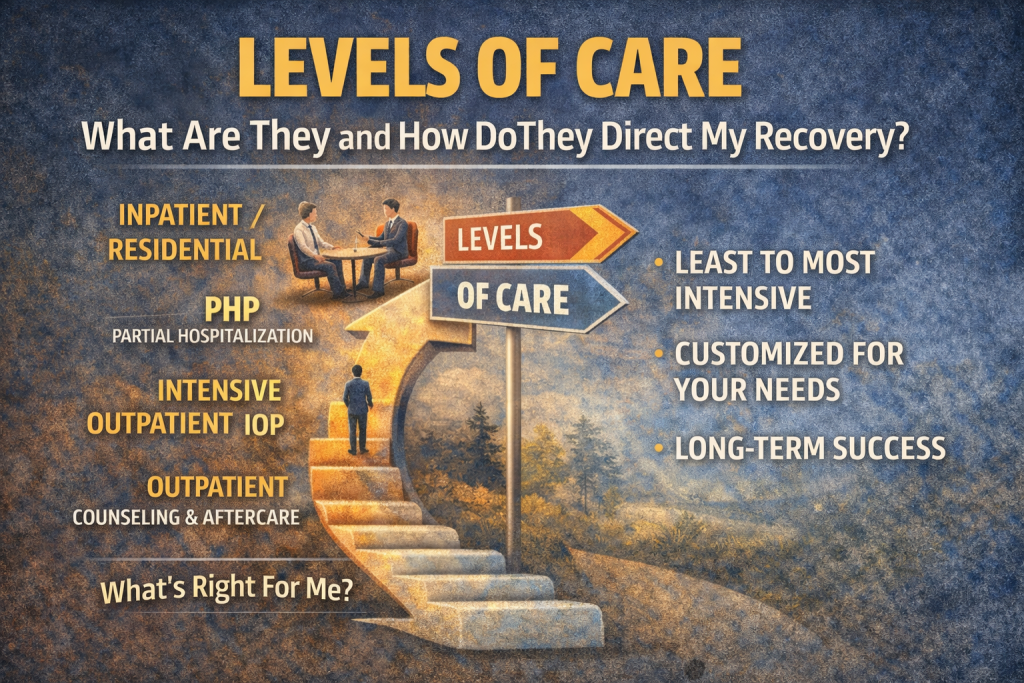
A practical map of detox, residential, PHP, IOP, outpatient, medication, and peer support—based on fit and safety.
Why levels of care exist
Levels of care are designed to match:
- medical risk (withdrawal, complications)
- psychiatric risk (suicidality, psychosis, severe depression)
- environmental stability (housing, safety, access to substances)
- capacity (impulse control, cognition, ability to follow a plan)
This starts with clinical assessment.
Common levels of care
1) Medical Detox (withdrawal management)
Best when withdrawal is medically dangerous (often alcohol/benzodiazepines). See why some substances require medical detox. Detox is stabilization, not recovery—see Detox Is Not Treatment.
2) Inpatient / Residential
24/7 structured environment for people who need removal from triggers, have unstable housing, or need high structure.
3) Partial Hospitalization (PHP)
High-intensity day treatment (often 5–6 days/week) while sleeping at home or in supportive housing.
4) Intensive Outpatient (IOP)
Typically 3–5 days/week, multiple hours per day. Works best with stable housing and reasonable support.
5) Outpatient
Weekly therapy, medication visits, case management, and community supports. Often paired with peer support.
6) Medication-based care
Medications can be used at multiple levels. For opioid use disorder, MOUD is strongly evidence-based and reduces overdose death.
7) Peer recovery support
Peer support provides coaching, connection, navigation, and accountability—especially useful during transitions and early recovery.
How clinicians choose a level of care
Clinicians look at risk and functioning, not just substance amount:
- withdrawal danger
- overdose risk and recent abstinence
- co-occurring mental health needs (see co-occurring disorders)
- impulse control and decision-making capacity (see risk and cognition)
- environment safety and housing stability
Where harm reduction fits
Harm reduction reduces death and injury while stability grows—especially during transitions between levels of care. Naloxone access, safer-use planning, and avoiding mixing substances saves lives.
Related Reading
- Clinical Assessment and Diagnosis of Substance Use Disorders (SUDs)
- Detox Is Not Treatment: What Detox Does — and What It Doesn’t
- MOUD 101: What Medication for Opioid Use Disorder Is — and Why It Saves Lives
- Where Addiction Lives in the Brain — and Why It Can Feel Like Survival Without Substances Is Impossible
More Recovery Resources from Red Door
- Community Meetings Directory — Find AA, NA, SMART Recovery, Al-Anon, and Celebrate Recovery meetings
- Meetings Blog — Articles about recovery meetings and what to expect
- Peer Support Specialists — Connect with certified recovery coaches
- Harm Reduction Agencies — Naloxone, needle exchange, and overdose prevention
- Food Pantries — Free food assistance for those in need