Where Addiction Lives in the Brain
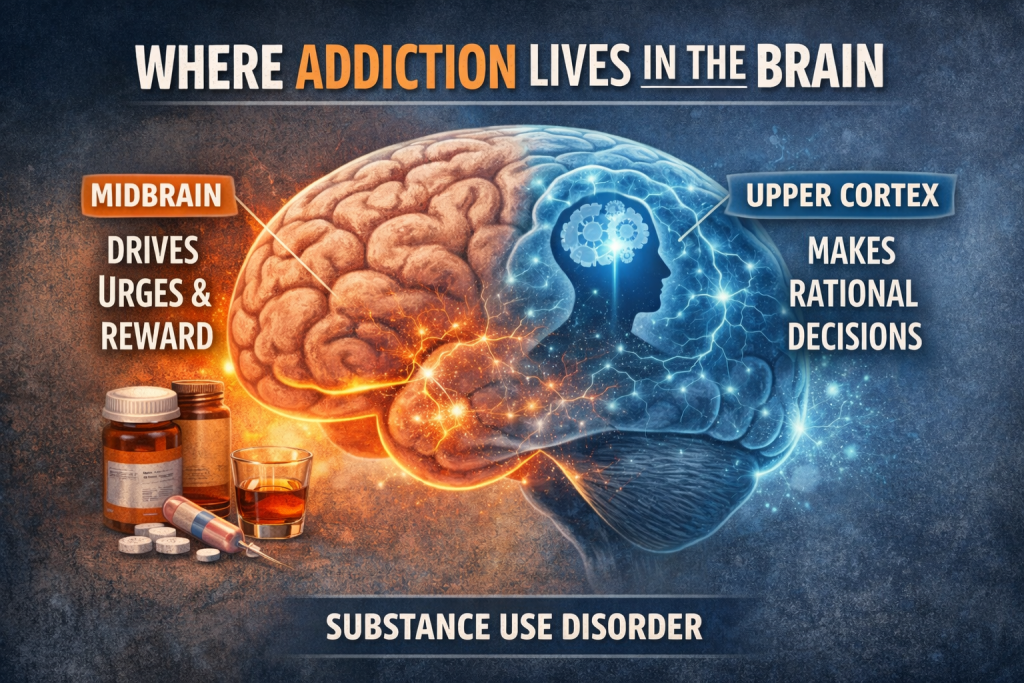
Where Addiction Lives in the Brain — and Why It Can Feel Like Survival Without Substances Is Impossible
How midbrain survival circuitry gets hijacked—and why cravings and withdrawal can feel like life-or-death.
The brain prioritizes survival over logic
When the brain detects threat, it shifts control away from reflective thinking and toward fast survival circuitry. In addiction, that circuitry gets trained to treat substances as “necessary.” This is why assessment and placement must consider capacity and risk (see clinical assessment and levels of care).
The midbrain: reward, motivation, and urgency
The midbrain governs reinforcement learning and “importance.” Dopamine signals salience—what must be pursued. Drugs and alcohol can produce dopamine responses that outcompete natural rewards, teaching the brain that the substance is top priority.
Why withdrawal feels like threat
When substances are removed, stress systems surge. The person may experience panic, urgency, and narrowed thinking. It can feel medically true that “I won’t survive without it.”
Why MOUD and structure help
Effective treatments calm survival alarms. For opioid use disorder, MOUD stabilizes cravings and reduces overdose risk. Appropriate levels of care reduce cognitive load while capacity rebuilds.
Where harm reduction fits
Harm reduction protects life while the brain relearns safety. It reduces immediate danger during transitions and high-risk periods.
Related Reading
- Levels of Care Explained: How to Know What Kind of Help You Actually Need
- Clinical Assessment and Diagnosis of Substance Use Disorders (SUDs)
- MOUD 101: What Medication for Opioid Use Disorder Is — and Why It Saves Lives
- Risk Assessment, Cognitive Function, and Impulse Control: How Substance Use Changes Decision-Making
More Recovery Resources from Red Door
- Community Meetings Directory — Find AA, NA, SMART Recovery, Al-Anon, and Celebrate Recovery meetings
- Meetings Blog — Articles about recovery meetings and what to expect
- Peer Support Specialists — Connect with certified recovery coaches
- Harm Reduction Agencies — Naloxone, needle exchange, and overdose prevention
- Food Pantries — Free food assistance for those in need